

Oncology
Gastroenteropancreatic Neuroendocrine Tumors
Gastroenteropancreatic Neuroendocrine Tumors: Patient Engagement, Partnerships, and Technology-Enabled Care


At the recent 2026 ASCO Gastrointestinal (GI) Cancers Symposium, speakers advocated for oncologists to employ technologies such as artificial intelligence (AI) and telehealth to build partnerships and expand access to the highest-quality oncology care.
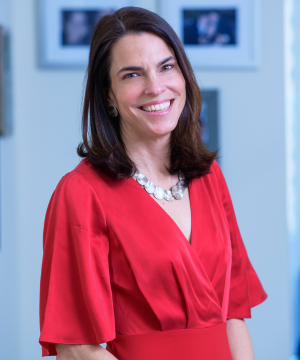
Following these presentations, featured expert Diane L. Reidy-Lagunes, MD, was interviewed by Conference Reporter Editor-in-Chief Tom Iarocci, MD. Clinical perspectives from Dr Reidy-Lagunes on these findings are presented here.
Caring for patients with gastroenteropancreatic neuroendocrine tumors (GEP-NETs) is incredibly rewarding. Many of our patients can live for many years after diagnosis, so we really develop strong relationships with them. It is a great responsibility to give them the gift of time and to help them live as well as they can for as long as they can, and this responsibility is fundamental in how we think about treatment. Fortunately, the landscape is constantly evolving, with newer therapies often being added to the treatment armamentarium.
We have regional approaches that may include surgery or interventional radiology, and then we have systemic approaches that target both the endocrine effects of the disease and the tumor. All of this demands shared decision making, and, for those of us who are fortunate to be in academic settings where we regularly have multidisciplinary meetings, this allows us to think about treatment and sequencing for a given individual with GEP-NETs so that we can bring these carefully considered, individualized choices back to the patient as we discuss the options.
In places that are more rural or where the opportunities to access centers of excellence are not as clear, it gets that much more challenging. Patients may have to travel for hours to access oncology care at an academic center. It is important to leverage technologies such as telehealth and to think differently about what the shared decision-making model might look like when patients are from more rural sites. The need for travel vs the convenience of care closer to home, as well as the potential for financial toxicities, are often top of mind for me when thinking about comprehensive care.
At the 2026 ASCO GI Cancers Symposium, W. Kimryn Rathmell, MD, PhD, FASCO, gave the keynote presentation titled “Meeting Patients With Cancer Where They Are—The Role of Dyad Partnerships in Oncology.” One of the themes of the presentation was the need to make medicine “less clunky” (ie, to improve oncology care and engage patients by expanding clinical trial participation through technology and telehealth).
Currently, telehealth providers must be licensed in each state in which their patients are located, and this can be impractical. Telehealth expansion and adoption are actually personal priorities for me, and I lobby actively on these issues. There have been some steps in the right direction in recent years. The Interstate Medical Licensure Compact is an agreement among US states that makes it faster and easier for physicians to get licensed in multiple states. Forty-two states have already joined this compact. This allows physicians who take care of patients with rare diseases such as GEP-NETs to get licensed in an expedited pathway and to offer their services across state lines, particularly in underserved areas. It also enables patients from more remote sites to participate in clinical trials.
Another theme during the keynote presentation was the special partnerships between oncologists in the community and those at academic centers. Dr Rathmell noted that these types of partnerships, which she called “dyads,” already occur organically in clinical practice, and I would agree with that. Whether a formal one-to-one pairing between community and academic oncologists would be feasible in every instance, I am not certain, but I do think that having some sort of easily navigated workflow to get the right patient to the right place at the right time seems tenable.
Leveraging technology in the form of AI is also critically important. During an Intersections Session at the 2026 ASCO GI Cancers Symposium called “Harnessing Artificial Intelligence for the Management of Gastrointestinal Cancers,” Kenneth L. Kehl, MD, MPH, gave a presentation titled “Artificial Intelligence and Clinical Trials Matching and Execution,” where he reviewed recent developments in this area. In particular, he highlighted the “growing ecosystem of Al-driven platforms,” mostly in the commercial space but some open-source applications.
Here at Duke Cancer Institute, we are very excited about potentially screening patients for clinical trials using AI. Our hope is that patients’ genetic markers, their performance status, and items from their medical records can be analyzed using AI to find trials that are open and recruiting. This could be a game changer because, currently, it can be very confusing for patients and their loved ones to navigate clinical trial protocols online to determine whether they are a good fit for protocols that are active and enrolling.
To summarize, we are very excited about these opportunities to simplify access for patients and strengthen oncology care. The first is leveraging telehealth to improve patient convenience and access to state-of-the-art treatment. This might include, for example, allowing patients from remote locations to enroll in clinical trials while reducing the need for hours of travel to a major center. The second is using AI and other technologies to help patients more easily identify which clinical trials are available and open to them.
Anaka M, Chan D, Pattison S, et al. Patient priorities concerning treatment decisions for advanced neuroendocrine tumors identified by discrete choice experiments. Oncologist. 2024;29(3):227-234. doi:10.1093/oncolo/oyad312
CompHealth. Interstate Medical Licensure Compact states list and guide for 2026. January 8, 2026. Accessed January 27, 2026. https://comphealth.com/resources/interstate-medical-licensure-compact
Kehl KL. Artificial intelligence and clinical trials matching and execution [session: Intersections session: harnessing artificial intelligence for the management of gastrointestinal cancers]. Session presented at: 2026 ASCO Gastrointestinal Cancers Symposium; January 8-10, 2026; San Francisco, CA.
Rathmell WK. Meeting patients with cancer where they are—the role of dyad partnerships in oncology [session: General session keynote]. Session presented at: 2026 ASCO Gastrointestinal Cancers Symposium; January 8-10, 2026; San Francisco, CA.
Unger JM, McAneny BL, Osarogiagbon RU. Cancer in rural America: improving access to clinical trials and quality of oncologic care. CA Cancer J Clin. 2025;75(4):341-361. doi:10.3322/caac.70006
This information is brought to you by Engage Health Media and is not sponsored, endorsed, or accredited by the American Society of Clinical Oncology.
Explore More in Gastroenteropancreatic Neuroendocrine Tumors

Gastroenteropancreatic Neuroendocrine Tumors
The Multimodal Treatment of Gastroenteropancreatic Neuroendocrine Tumors and Available Data on Combinatorial Strategies

Gastroenteropancreatic Neuroendocrine Tumors
Expert Roundtables Podcast: Individualizing Therapy for Patients With Advanced Gastroenteropancreatic Neuroendocrine Tumors

Gastroenteropancreatic Neuroendocrine Tumors
Treating Patients With Advanced Gastroenteropancreatic Neuroendocrine Tumors of Higher Biological Aggressiveness

Gastroenteropancreatic Neuroendocrine Tumors