
Pulmonology
COPD
When to Consider Oxygen Therapy for Chronic Obstructive Pulmonary Disease


As highlighted at the American Thoracic Society International Conference 2026 (ATS 2026), supplemental oxygen therapy has an important role in the treatment of patients with chronic obstructive pulmonary disease (COPD). However, practical nuances exist, and reimbursement challenges must be addressed to allow for appropriate prescribing.
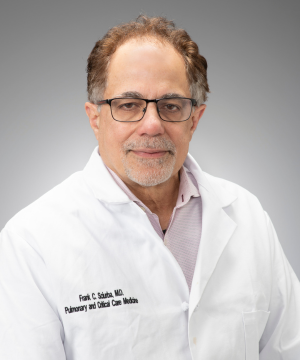
Following these presentations, featured expert Frank C. Sciurba, MD, FCCP, was interviewed by Conference Reporter Medical Director Lauren Weinand, MD. Clinical perspectives from Dr Sciurba on these findings are presented here.
Two presentations from the “COPD 2026: State of the Art” course at ATS 2026 provided some context for the use of oxygen therapy in COPD. Antonio R. Anzueto, MD, ATSF, included oxygen therapy in COPD as part of his discussion on updates from the Global Initiative for Obstructive Lung Disease (GOLD) 2026 report, and Carolyn L. Rochester, MD, discussed it as part of her presentation on pulmonary rehabilitation.
There is some very clear evidence for the use of oxygen therapy in COPD, and then there are some areas where there is still a bit of controversy. It has been known for a long time that if a patient’s SaO2 is 88% or lower or their PaO2 is 55 mm Hg or lower, they should wear oxygen for more than 15 hours a day. In clinical trials, patients were instructed to wear supplemental oxygen for as close to 24 hours per day as possible; they could remove it for tasks such as showering or eating. We know that this prolongs life. If a patient has pulmonary hypertension with an SaO2 of 88% or a PaO2 between 55 and 60 mm Hg, or has other complications of hypoxemia, they will also benefit from supplemental oxygen.
The 2016 LOTT trial is the most recent large multicenter study on the use of supplemental oxygen in patients with stable COPD and resting or exercise-induced moderate desaturation. The authors reported that supplemental oxygen did not result in improved survival or decreased hospitalization, which was the combined outcome parameter of the study. Technically, we cannot say that supplemental oxygen does not alter survival or hospitalization, only that it was not reported to affect the combination of the 2 in LOTT. When a study has a composite outcome like this, all we can comment on is the significance of that composite outcome. Based on these data, we do not give supplemental oxygen with exertion to patients with borderline oxygen levels to prolong life or prevent hospitalization.
On the other hand, in my opinion, this information has been inappropriately and broadly applied to not giving supplemental oxygen with exercise at all. The validity of oxygen therapy is clear at face value; if you put oxygen on a patient who is desaturating into the low 80s, they feel much better. Arguing against the use of oxygen therapy is like saying, “Do not give morphine to a suffering patient with cancer because it is not going to prolong their survival.” It decreases their suffering. It is necessary to get them through their day. This is why I give supplemental oxygen to patients who are desaturating while exercising, including those with COPD. It is based on my pragmatic experience, supported by results of small mechanistic clinical trials, despite having what some might consider to be insufficient backing from large evidence-based clinical trials.
There is a third area that is not controversial at all, but it results in a hindered application of appropriate therapy: cutbacks in Medicare reimbursement. Unfortunately, our ability to deliver supplemental oxygen has been damaged by reimbursement changes, especially for the option of liquid oxygen. Liquid oxygen is a lightweight and potentially longer-lasting oxygen delivery that we can give during exertion. It helps address the particular challenge of treating patients with COPD who require higher-level supplemental oxygen with exertion. Without it, these patients are limited to only leaving their house for brief periods, basically rendering the device nonfunctional. To receive adequate oxygen delivery, they would need to carry heavier devices or cylinders.
An additional challenge is that oxygen-saving technology such as pulse devices may not provide sufficient continuous flow in higher flow–requiring patients. This is an area where I hope our organizations and advocacy groups will have some governmental influence, because the insurers and payors will follow Medicare on this topic. It is an enormous problem in supplemental oxygen delivery, and regulatory improvements must occur for us to offer better treatment and minimize the suffering of our patients with advanced lung disease.
Anzueto AR. GOLD 2026. What’s new [session: PG7 COPD 2026: state of the art]? Session presented at: American Thoracic Society International Conference 2026; May 15-20, 2026; Orlando, FL.
Dilektasli AG, Porszasz J, Stringer WW, Casaburi R. Physiologic effects of oxygen supplementation during exercise in chronic obstructive pulmonary disease. Clin Chest Med. 2019;40(2):385-395. doi:10.1016/j.ccm.2019.02.004
Global Initiative for Chronic Obstructive Lung Disease. Global strategy for the diagnosis, management, and prevention of chronic obstructive pulmonary disease: 2026 report. Accessed July 8, 2026. https://goldcopd.org/wp-content/uploads/2025/12/GOLD-REPORT-2026-v1.3-8Dec2025_WMV.pdf
Long-Term Oxygen Treatment Trial Research Group; Albert RK, Au DH, Blackford AL, et al. A randomized trial of long-term oxygen for COPD with moderate desaturation. N Engl J Med. 2016;375(17):1617-1627. doi:10.1056/NEJMoa1604344
Rochester CL. Updates on pulmonary rehabilitation [session: PG7 COPD 2026: state of the art]. Session presented at: American Thoracic Society International Conference 2026; May 15-20, 2026; Orlando, FL.
This information is brought to you by Engage Health Media and is not sponsored, endorsed, or accredited by the American Thoracic Society.