
Oncology
PSMA+ mCRPC
Improving Prostate Cancer Screening Strategies


Long-term data from the ERSPC trial indicate that prostate-specific antigen (PSA) screening significantly lowers prostate cancer all-cause mortality and offers a better harm-to-benefit profile over time. Clinical practices are evolving toward risk-stratified screening and magnetic resonance imaging (MRI)–guided biopsy, potentially enhanced by artificial intelligence, to improve the detection of significant disease and reduce the overdetection and overtreatment of low-risk prostate cancer.
To this day, there is controversy around prostate cancer screening. Because prostate cancer has a protracted natural history, even for advanced disease, you must look at long-term outcomes to understand the impact of screening. The 2025 follow-up of the ERSPC study showed that, with time, the value of PSA screening demonstrates a more favorable profile. In other words, the harm-benefit ratio gets better over time. Although it is clear to me that screening saves lives, I think that the key issue is how many lives do you save at what harm? We can provide a relative risk reduction, but many people want to know actual numbers (eg, how many lives do you save for every 1000 people who are screened?). Although we have more data on screening, this controversy remains a global controversy.
Historically, PSA screening was done (often repeatedly at short intervals) in men who may not have benefited from it (ie, older patients). However, now there is a more uniform approach in which patients are screened early (ie, at ≤45-50 years for patients who are at increased risk, such as those with a strong family history or germline mutations), and the frequency of testing is tailored to the individual’s risk.
Overall, PSA is a good biomarker. Although it lacks specificity, it has good sensitivity. You can identify cases of prostate cancer by using PSA, but what you really want to do is identify the cases that represent a risk to the patient. To that end, PSA alone should rarely trigger a biopsy; another biomarker with improved specificity should be used. This has led to the rise of secondary testing, such as MRI or urine or serum biomarkers, following an elevated PSA.
The biggest risk of a biopsy is not bleeding and/or infection, it is the risk of detecting low-risk disease and then being treated unnecessarily. Many men with low-risk prostate cancer never have a problem. So, I tell my patients, “We are going to do a biopsy to determine whether you have clinically significant disease, not whether you have cancer. And you might have cancer that we are going to tell you not to treat.” We need a modern definition of prostate cancer as a spectrum of disease, not just a progressive or lethal disease.
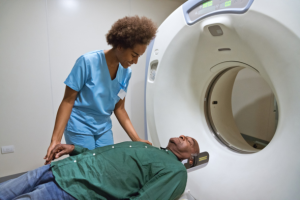
Regarding future directions, I think that we are moving toward MRI-guided biopsy, which decreases the risk of detecting low-risk disease while improving the detection of high-risk disease. If you use MRI in addition to biomarkers such as PSA, you may also decrease biopsy rates, but the issue here is cost. I think that biparametric prostate MRI without contrast performs rather well—it is faster and has lower costs. The main issue with biparametric prostate MRI is interpretation. Do we have enough expert readers? I think that artificial intelligence could have a big impact here.
If a patient does need a biopsy, most do both systematic and targeted biopsies at diagnosis. Most do systematic biopsies initially because, if you take just 2 biopsies at the target, you may miss cancer around it. Better sampling of, and around, the target improves detection. However, the issue with oversampling the target is that you may overestimate the risk if you base risk on the number of cores that are positive irrespective of location.
Overall, I hope that there will be a consensus on screening. We need to clearly understand the risks and benefits, relay that to patients, and continue to appropriately use surveillance rather than defensive therapy in low-risk disease.
Elkhoury FF, Felker ER, Kwan L, et al. Comparison of targeted vs systematic prostate biopsy in men who are biopsy naive: the Prospective Assessment of Image Registration in the Diagnosis of Prostate Cancer (PAIREDCAP) study. JAMA Surg. 2019;154(9):811-818. doi:10.1001/jamasurg.2019.1734
Fakunle MO, Cowan JE, Washington SL 3rd, Shinohara K, Nguyen HG, Carroll PR. Targeted biopsy is sufficient for men on active surveillance for early-stage prostate cancer. J Urol. 2025;213(1):34-39. doi:10.1097/JU.0000000000004265
Feuer Z, Meng X, Rosenkrantz AB, et al. Application of the PRECISION trial biopsy strategy to a contemporary magnetic resonance imaging-targeted biopsy cohort—how many clinically significant prostate cancers are missed? J Urol. 2021;205(3):740-747. doi:10.1097/JU.0000000000001406
Gelikman DG, Yilmaz EC, Harmon SA, et al. Evaluating artificial intelligence–assisted prostate biparametric MRI interpretation: an international multireader study. AJR Am J Roentgenol. 2025;225(6):e2432399. doi:10.2214/AJR.24.32399
Ion RT, Serbanoiu A, Salcianu AI, Popa MN, Filipoiu FM, Bratu AM. The accuracy of biparametric prostate MRI in the pathway of patients with prostate cancer. Cureus. 2025;17(5):e83663. doi:10.7759/cureus.83663
Kasivisvanathan V, Rannikko AS, Borghi M, et al; PRECISION Study Group Collaborators. MRI-targeted or standard biopsy for prostate-cancer diagnosis. N Engl J Med. 2018;378(19):1767-1777. doi:10.1056/NEJMoa1801993
Leapman MS, Wang R, Park H, et al. Changes in prostate-specific antigen testing relative to the revised US Preventive Services Task Force recommendation on prostate cancer screening. JAMA Oncol. 2022;8(1):41-47. doi:10.1001/jamaoncol.2021.5143
Odisho AY, Liu AW, Pace WA, et al. Generative artificial intelligence successfully automates data extraction from unstructured magnetic resonance imaging reports: feasibility in prostate cancer care. JCO Clin Cancer Inform. 2026;10:e2400334. doi:10.1200/CCI-24-00334
Roobol MJ, de Vos II, Månsson M, et al; ERSPC Investigators. European study of prostate cancer – 23-year follow-up. N Engl J Med. 2025;393(17):1669-1680. Published correction appears in N Engl J Med. 2026;394(11):1144.
Tesfai A, Norori N, Harding TA, Wong YH, Hobbs MD. The impact of pre-biopsy MRI and additional testing on prostate cancer screening outcomes: a rapid review. BJUI Compass. 2024;5(4):426-438. doi:10.1002/bco2.321